One system: color selection, formula and dispensing
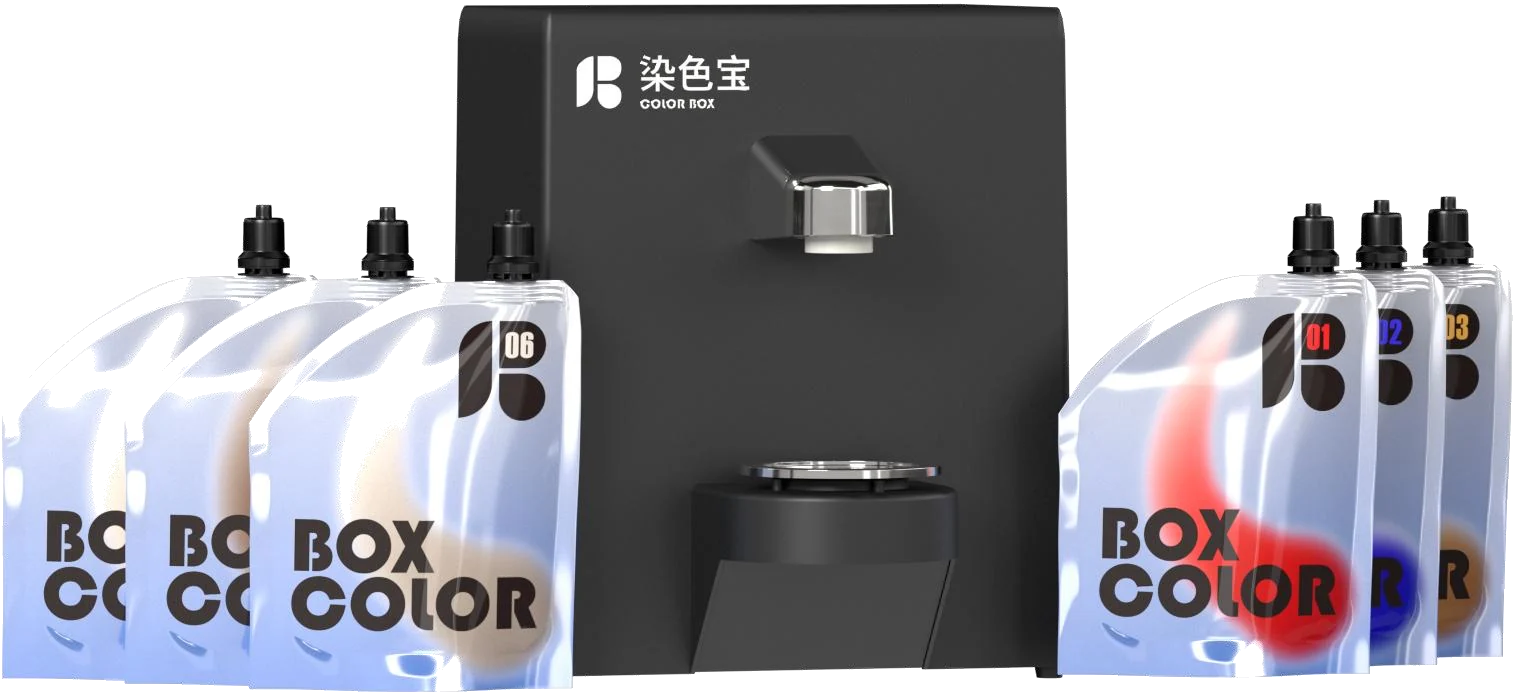
Choose the scenario in the digital charts, confirm the formula and the amounts — as a standard ready-made plan or a professional DIY formula — and the device dispenses by section as planned. Below is the full chart set, section by section.
1. EU Color System
EU chart · familiar logic, wider color range
Rich main colors, tone tools and base colors in one entry point. Warm and cool tones (gray, green, yellow, orange, red, purple, blue), post-bleach tones (pink gray, purple gray, beige gray, blue gray) and brown base colors from 3-0 to 8-0 across the full level range. Work with a single shade or a multi-shade combination — each shade and its amount is confirmed by the professional formula first.
Reduce scattered tube inventory and on-the-spot mixing.
2. JP Color System
JP chart · sheer, misty tones, familiar JP logic
Numeric tones, letter tones and warm and cool bases layered clearly, so stylists do not have to mix just to reach a level. Chart references include 10 Gray Violet, 20 Gray Green, 40 Orange and 55 Pink Gray, with CB Cool Base and NB Warm Base. Levels run from 4 to 13, and the base is selected by formula.
A familiar JP workflow with less trial and error to reach the target level.
3. Perfect Gray Coverage
Gray coverage chart · choose by gray area and target level
This is the name of the dedicated gray-coverage chart in the Color Box chart set. It is organised in three ranges: Perfect Coverage at 4–4.5N, Fashion Coverage at 5–5.5N and High-lift Coverage at 5.5–6N. Check the dedicated formula and conditions for the case in front of you — the focus differs between new growth at the roots and the mid-lengths and ends.
Fewer complex base mixes, and clearer section-by-section choices.
4. Lifestyle Color
3–6N base · everyday browns, matched by base level
Everyday wearable browns — tea brown, cool mist brown and mocha brown. Confirm the natural base range first (from deep black to light brown), then check the formula section by section: roots are confirmed on their own, and dark lengths are assessed separately from the roots.
Faster selection for everyday browns on busy salon days.
5. Micro-trend Segmented
Master level · the key is section-by-section application
Ready-made formulas give the color direction, while the same target is judged by base level and application order for each section. Roots: new growth and gray status, and whether a separate formula is needed. Dark lengths: natural dark base level, and the warm/cool difference. Pre-colored ends: current color and hair condition, and whether to tone up or care first.
Less creative mixing burden, and control of warm and cool differences across multi-tone hair.
6. High-lift Micro-trend
Base first, then overlay — unify the base before the target tone
When black, yellow and brown are mixed in one head of hair, clarify the base first and only then overlay the target tone. A cool target starts from a cool base; a warm target starts from a warm base. The base is unified by the target's warm or cool direction before the overlay is applied.
A structured way to approach banding risk when color is applied directly onto multi-tone hair.
7. Fashion Colors
Post-bleach fashion colors · correct the base first, then the target tone
Do not look at the target alone — assess the post-bleach level and the tone difference first. Cool base correction works from a bleached reference of 8.5 degrees and above, the neutral base from a bleached reference of 8 degrees, and the universal base fix addresses obvious tone differences after bleaching. Process: correct the base evenly, then choose the target, then finish with a bath dye or a normal dye application.
A clear direction for yellow cast, banding and warm/cool gaps after bleaching.
8. Correction Shades
Problem path · map common issues to the right function
Common correction issues are mapped to a function instead of trial and error. Multi-tone base differences map to Base / Correction, to unify the base. A post-color yellow or orange cast maps to De-yellow / De-orange, to correct the tone. Dry ends and pigment overload map to Balance Pigment, to stabilise the ends. A local root-to-end color gap maps to Segment Touch-up, to narrow the gap.
Turn common correction issues into an executable path, with less on-the-spot trial and error.
9. Bath Tone Care
Color aftercare · tone up as color fades, not just a one-time service
Choose bath care by the post-service color direction. Cool tones (ash, gray, silver directions) work against the yellow cast that appears over time. Warm tones (gold, copper, bronze directions) maintain warmth and shine. Neutral tones (natural brown, beige directions) stabilise tone and reduce the look of fade between color services.
Builds recurring aftercare visits: clients return before the color has faded out.
B2B trade enquiries
Pilot markets: United Arab Emirates, Saudi Arabia and Malaysia. Tell us your company, country, channel type and salon network size, and we will reply with the confirmed details for your market.
WhatsApp: +8613077878567Email: hemingwang@simiai.top